

Upgrading to LED lights for cars is one of the easiest ways to improve visibility and refresh how your vehicle looks, but not every LED product is built the same way.
Some LEDs handle everyday driving needs like brake lights and turn signals, while others are purely styling upgrades. Knowing the difference before you buy saves you from picking the wrong product for the job.
This post walks through what actually matters when choosing LED lights, from functional rear lighting to decorative hood strips, so you can make a decision that fits your vehicle and your driving habits.
Traditional bulbs draw more power, wear out faster, and often produce dimmer, less consistent light. LED lighting solves most of these issues. It runs cooler, lasts longer, and typically produces a brighter, more uniform glow.
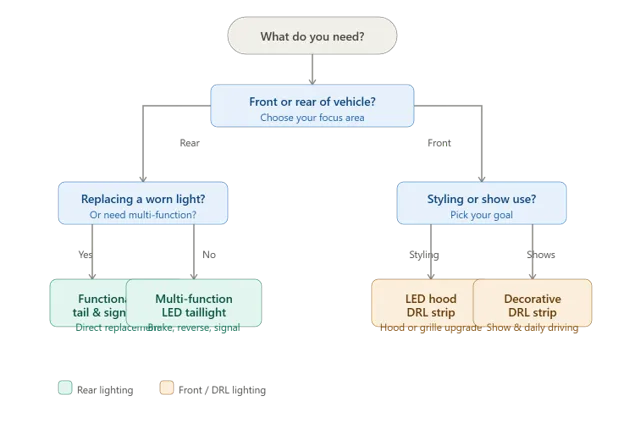
That said, LED upgrades fall into two different categories, and it helps to know which one you’re shopping for before you start comparing products.
This covers parts your vehicle depends on for everyday operation, like tail lights, brake lights, and turn signals. These aren’t optional extras. They’re tied to how other drivers read your movements on the road.
This covers styling upgrades like hood strips and ambient lighting. These add visual appeal and can offer a secondary visibility benefit, but they’re not a replacement for your vehicle’s required lighting.
A few practical factors decide whether an LED product is the right fit for your vehicle:
Most automotive LED products run on a standard 12V electrical system, but connection points can differ. Some wire directly into your ACC or ignition circuit, while others connect through existing brake or signal wiring. Confirm the wiring setup matches your vehicle before purchasing.
Are you replacing a worn-out tail light, or are you adding a styling accent to your hood? These are different jobs with different products, so it helps to be clear about your goal first.
LED housings sit through rain, heat, and road grime. A durable, waterproof casing matters more for lights used year-round, especially rear lighting exposed to constant road spray.
Some LED products install with basic tools and no drilling, while others may need more involved wiring work. If you’re not comfortable with automotive wiring, choose a product designed for simple, beginner-friendly installation.
A dependable example of functional lighting is a 12V LED tail and signal light, built with multiple LEDs handling several jobs at once: brake light, reverse light, stop lamp, turn signal, and number plate light, all from a single compact unit.
This kind of multi-function design works well on trailers, trucks, caravans, and standard vehicles, since one unit replaces what would otherwise be several separate bulbs. Energy-efficient LEDs mean lower power draw and a longer service life compared to standard bulbs, and a waterproof housing helps it hold up against road conditions and changing weather.
Multi-function LED taillights like this may help improve visibility for the drivers behind you during nighttime driving and signaling, though how much difference it makes depends on your existing lighting setup and driving conditions.
You can browse this kind of rear lighting under Auto Add-On Store’s Lights and Bulbs category.
If your goal is styling rather than functional replacement, an LED hood DRL strip is a common upgrade. It’s a flexible LED strip that runs along the hood edge or grille line, often with a scanning start-up effect that activates when the vehicle starts.
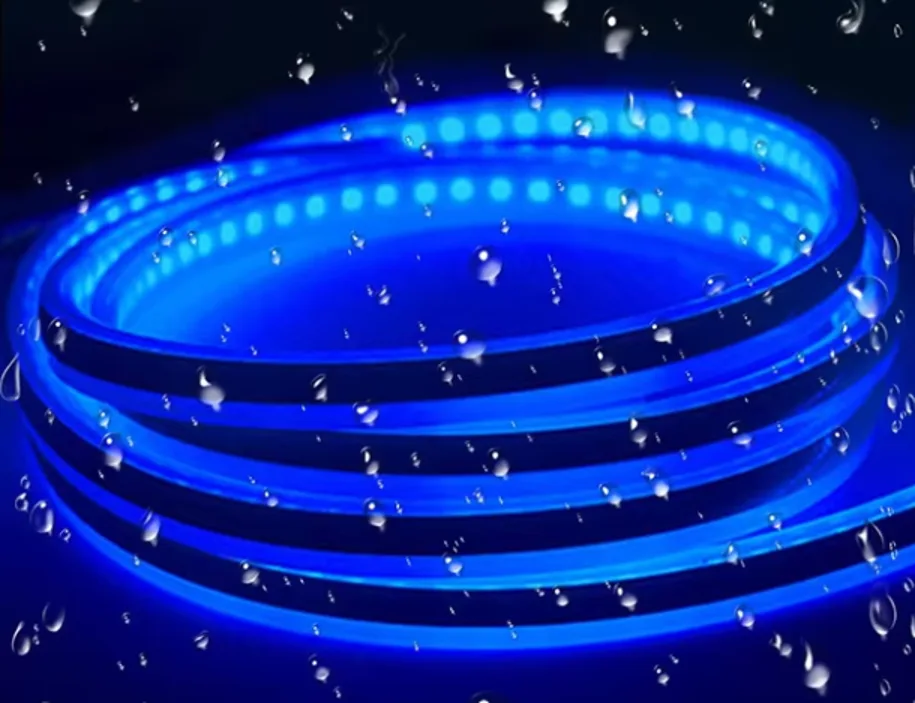
The flexible LED material conforms to the shape of most hoods, and the low-profile design fits sedans, SUVs, and trucks without disrupting the car’s original look. Installation typically uses automotive-grade adhesive, with wiring connected to the ACC, DRL circuit, or ignition depending on when you want it to activate.
It’s worth being clear about what this product is: primarily a styling accessory. While a bright, uniform LED glow near the front of the vehicle may add a secondary visibility benefit during dusk, dawn, or foggy conditions, it isn’t a substitute for your vehicle’s required daytime running lights or headlights.
If a distinctive front-end look is what you’re after, this category is available under Auto Add-On Store’s Accessories collection.
Do LED lights for cars fit every vehicle?
Most LED products use standard 12V wiring and universal mounting, but always confirm fit and wiring compatibility with your specific vehicle before buying.
Can I install car LED lights myself?
Many LED products, including hood strips and tail lights, are designed for simple installation with basic tools, though wiring experience helps for more involved setups.
Are decorative LED strips the same as headlights?
No. Decorative strips like hood DRL lights are styling accessories and don’t replace your vehicle’s required headlights or daytime running lights.
Whether you’re replacing a functional tail light or adding a styling upgrade to your hood, choosing the right LED lights for cars comes down to knowing what job you need the light to do.
Functional lighting keeps your vehicle’s required signals working reliably, while decorative lighting adds character without replacing that core function.
Explore both options under Auto Add-On Store’s Lights and Bulbs and Accessories categories to find the right fit for your vehicle.
